THE WAKKER WEEKLY – Issue #1855

As we get deeper into another sensational Saskatchewan summer the nights are cooling off making for a prime time to relax around a campfire with a nice Bushwakker Blackberry Mead! Only a few cases of our summer release remain in our offsale cooler. Be sure to pick up a bottle or two before they are all gone!
BUSHWAKKER SEASONAL BEER STATUS Our seasonally available UPENDI PINEAPPLE PASSION FRUIT SOUR, HONEY THISTLE WIT, CHINOOK E.S.B. and BARON BOCK are currently available. Bottles of our famous BLACKBERRY MEAD are also available in our offsale as part of our 2026 Summer Mead Release. A batch of CARA CARA ORANGE ALE will soon be working its way through the brewery.
Our WEEKEND SPECIAL DINING FEATURE for August 14th & 15th is a SMOKED SOUTHERN HOT PLATE. Our Saturday CLASSIC STEAK & A PINT SPECIAL as well as our Monday and Wednesday WINGS & A PINT SPECIAL and Tuesday PIZZA & A PINT SPECIAL are also great value deals. Please note you can also have a pop, lemonade, sarsaparilla, ice tea or coffee instead of a pint of beer if you wish!
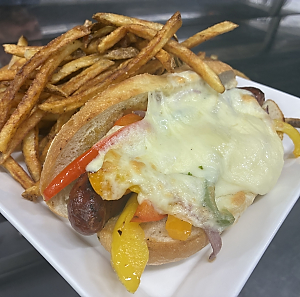
Our Summer Seasonal BBQ Menu is here! Enjoy six sumptuous smoky sensations including our Smoked Philly Cheese Dog! A house-made and smoked spiced pork and beef brisket sausage grilled to order and served on a hoagie bun with mixed peppers and red onions topped with melted provolone cheese. Served with your choice of tossed salad, our award-winning fires or a bowl of our soup du jour.
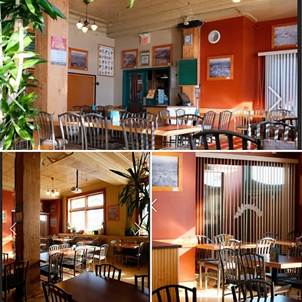
Our Arizona Room private banquet room is now once again available for private party rentals. The room seats up to 50 people and features plenty of Chicago style warehouse character with large windows, a pressed tin ceiling and plenty of plants too! Contact info@bushwakker.com to secure the room for your next gathering today!
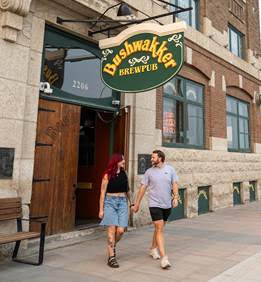
The summer Hop Circuit is headed into the home stretch! Those limited edition 2026 Hop Circuit glasses are really dwindling in numbers! So pick up your free passport map and take a hike or ride your bike and visit all six participating Regina craft breweries asap! Collect a stamp at all six locations and receive your free 2026 Hop Circuit commemorative glass! Get out there and enjoy another beautiful Queen City summer with some sensational Saskatchewan suds!
UPCOMING EVENTS
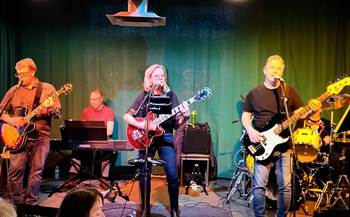
Aug. 17: Monday Night Jazz & Blues. JUSS SAYIN’. Great jazz and blues act featuring vocalist and guitar player, Jan Seitz. 7:30 PM – 9:00 PM.
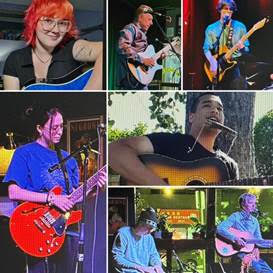
Aug. 19: Wednesday Folk Night. SUMMER SINGER/SONGWRITER SHOWCASE. Local songsmith, Neil Child, curates another collection of Queen City artists including: Abby Kaitlyn, Avery Heller, Trenton Leggott, Andrew Verlysdonk, Victory Howard and Baron Child! 7:30 PM – 9:00 PM.
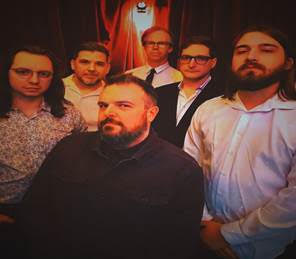
Aug. 24: Monday Night Jazz & Blues. THE INCONSOULABLES. 60’s and 70’s garage, rock, soul and funk classics. Think “Commitments” vibes and you may understand why this band is making their Bushwakker debut on a Jazz & Blues night. 7:30 PM – 9:00 PM.
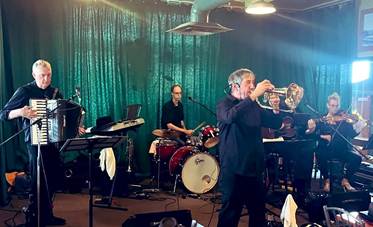
Aug. 26: Wednesday Folk Night. NARROW GATE. Popular group delivers folk, jazz, pop and gospel delivered on string bass, mandolin, guitar, accordion, keyboards, flugel horn, drums, flute and vocals. 7:30 PM – 9:00 PM.
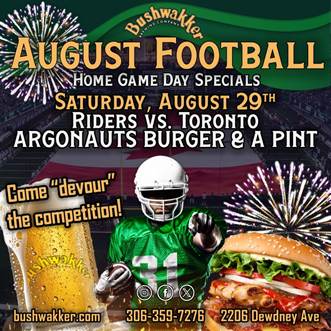
Aug. 29: RIDERS HOST TORONTO. Kickoff is at 5:00 PM. Be sure to stop by and enjoy our gourmet ARGONAUTS BURGER & A PINT special before, during or after the game. Don’t forget you can park in the huge free parking across the street and then take the free Dewdney shuttle to and from the game. Come “devour” the competition!
Why America’s Non-Alcoholic Beer Movement is Just Getting Started
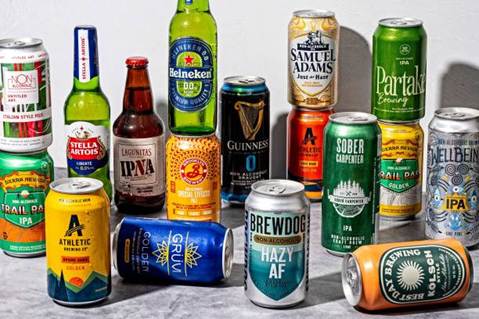
For years, non-alcoholic beer existed as little more than an afterthought. It sat dusty on the bottom shelf of grocery stores, usually represented by a handful of brands that seemed designed more for punishment than enjoyment. Ordering one at a bar often felt like broadcasting a personal crisis to the room. Most beer drinkers simply ignored the category altogether.
That’s changing rapidly.
Over the last several years, non-alcoholic beer has quietly transformed from one of the beer industry’s most mocked segments into one of its fastest-growing. According to data from the Beer Institute, the category grew another 23% in 2025 and now accounts for roughly 87% of all non-alcoholic beverage alcohol sales in the United States. Meanwhile, retailers continue expanding shelf space, bars are carrying broader selections, and breweries are investing heavily in alcohol-free products that increasingly taste like the real thing.
More importantly, consumer attitudes are shifting with it.
I’ve watched that change firsthand over the last few years. As a bourbon lover who worked for a decade in the beer industry, I never expected non-alcoholic beer to become something I’d actively seek out. But like many drinkers getting older, I’ve found myself increasingly looking for balance. I still enjoy a nice adult beverage, but I also play a lot of tennis, travel constantly, and no longer recover from late nights the way I once did.
That shift has become impossible to ignore in Europe, where I spend several months each year. Here, non-alcoholic beer doesn’t feel like a niche category or a wellness experiment—it feels normal. When I am out and about at cafés, during long lunches, and inside grocery stores, I see people reaching for NA beers with little fanfare. After matches at the local tennis center, one out of every three beers I see being sipped is usually an NA option.
That normalization may offer a glimpse of where the American market is ultimately headed.
“When I was first looking at the NA category, I kept looking to Europe,” Tate Huffard, founder and CEO of Best Day Brewing, told me during a recent interview. “As a percent of total beer, you’re talking double digits there. Ten to twelve percent of the total beer volume in some countries. Here in the U.S., it was basically 0.3% forever. Therein lies the opportunity.”
Today, the American market has climbed above 2% of total beer sales, a figure that once sounded wildly optimistic to many in the industry. Huffard believes the category is still in its early innings. Part of this acceleration comes down to a simple reality: non-alcoholic beer finally got good.
For decades, the category suffered from terrible liquid and even worse branding. Early NA beers often tasted flat, overly sweet, or cooked down from aggressive alcohol-removal methods. Many consumers associated them with abstinence, recovery programs, or compromise rather than enjoyment.
Huffard experienced those perceptions firsthand, and they informed his decisions when launching Best Day Brewing. “The world didn’t need a slightly better O’Doul’s,” he said. “That wasn’t going to excite anyone. It needed to be a standalone great beer on its own that happened to have no alcohol.”
That philosophy has increasingly become the blueprint for the modern NA movement. The pioneering Athletic Brewing helped prove Americans would buy non-alcoholic craft beer if the quality was there. Newer brands like Best Day are pushing the category further into the mainstream by focusing less on sobriety messaging and more on lifestyle, flavor, and social participation.
The scale Athletic has already achieved also shows just how large the NA opportunity may ultimately become. Earlier this year, Athletic Brewing was ranked the sixth-largest craft brewer in the United States by volume and the fifteenth-largest brewery overall in the country by the Brewers Association, an almost unimaginable position for a company focused entirely on non-alcoholic beer just a few years ago. If additional NA-focused breweries begin reaching anything close to that level of scale, the category’s long-term impact on the broader beer industry could be substantial.
Best Day brews its beers traditionally through full fermentation, then removes the alcohol using a low-temperature process designed to preserve aroma and body. The approach is more expensive and technically difficult, but it produces beers that taste markedly closer to their alcoholic counterparts than earlier generations of NA beer.
That quality shift is creating the category’s most important breakthrough moment: consumers trying a non-alcoholic beer and realizing it actually tastes like beer.
“I can’t tell you how often we hear, ‘Wait, this is non-alcoholic?’” Huffard said. “That’s the greatest feedback we can get.”
American drinking habits are changing in ways that go well beyond the beer aisle. Younger consumers are drinking less alcohol overall, while older drinkers are seeking moderation without removing themselves from social occasions. The rise of wearables, sleep tracking, fitness culture, and broader wellness trends after the pandemic has only accelerated those conversations. Yet most people still want the communal experience of meeting friends for drinks, sitting at a bar after work, or gathering around a cooler at a cookout.
That’s where the current NA movement becomes particularly interesting. Most consumers buying non-alcoholic beer are not sober. According to Huffard, more than 90% of NA beer drinkers still consume alcohol; they’re simply drinking differently.
That distinction matters because it fundamentally changes what non-alcoholic beer represents in the American market. Rather than replacing traditional beer outright, NA beer is increasingly carving out entirely new drinking occasions. Some consumers are reaching for one after workouts. Others are using them to pace themselves during long nights out or as alternatives to soda and sparkling water during the week when they still want the social feeling of having a beer in hand.
“The growth in non-alcoholic beer mostly isn’t coming from replacing alcohol,” Huffard said. “It’s replacing sparkling water, soda, iced tea — all those moments where people still want the beer experience.”
That broader shift may ultimately explain why the category continues to accelerate rather than leveling off. Unlike hard seltzers or heavily hopped IPAs, non-alcoholic beer doesn’t appear tied to a single demographic or drinking trend. Its growth is being fueled simultaneously by younger consumers embracing moderation and by older consumers seeking balance without fully stepping away from beer culture.
The category also benefits from something many earlier beverage trends lacked: international proof of concept.
In much of Europe, non-alcoholic beer has already moved well beyond novelty status. It’s embedded into drinking culture in a way America is only beginning to experience. If the U.S. eventually approaches even half the market penetration seen in some European countries, the implications for breweries, retailers, bars, and beverage companies would be enormous.
That possibility helps explain why nearly every major beer company is now investing heavily in the category. Heineken 0.0 has become one of the world’s most visible non-alcoholic beer brands, Guinness 0.0 continues expanding aggressively, and newer craft-focused entrants continue flooding into the space as retailers steadily devote more shelf space to NA offerings.
Not every brand entering the category will survive, however. Huffard believes the biggest long-term risk remains poor quality products being rushed into the market, which will only reinforce decades-old perceptions around non-alcoholic beer.
“It’s very easy to make a terrible non-alcoholic beer,” he said. “It’s very hard to make a great one.”
That challenge matters because many consumers are still trying the category for the first time. One poor experience can quickly remind drinkers why so many Americans ignored the segment for decades in the first place. But for breweries that can successfully combine quality liquid with modern branding and lifestyle-driven messaging, the opportunity ahead appears enormous.
The rise of non-alcoholic beer in America is looking less like a temporary wellness trend and more like the early stages of a permanent shift in how Americans drink. Europe may simply be several years ahead of where the United States is heading. If the current pace continues, the question isn’t whether non-alcoholic beer will become commonplace in America—but just how soon.
TIME OUT – Non-Al Nonsense
Ordering a non-alcoholic beer is like bringing a highlighter to a house party; you’re technically there to participate, but everyone knows you’re just there to remember exactly what happened the next morning.
Why is drinking non-alcoholic beer like driving a sports car with a speed limiter? It looks great in the driveway, but it’s never going to give you the rush you were expecting.
A man walks into a bar and orders a non-alcoholic beer. The bartender says, “We don’t serve those here.” The man asks, “Why not?” The bartender replies, “Because if I wanted to watch someone drink something that tastes like beer without getting a buzz, I’d just let my kids drink the dishwater.”
Non-alcoholic beer is like a movie trailer that shows all the best parts but then the theater loses power right as the film starts.
Drinking non-alcoholic beer at a bar is like going to a heavy metal concert just to wear earplugs and read the lyrics on a screen. You’re getting the gist of it, but you’re definitely missing the vibration.
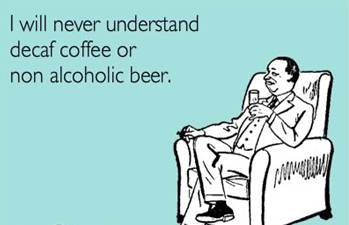
Whether you understand it or not, non-al beer sales are on the rise. With so many new craft brands available, you no longer have to “suffer” through a watery bland brew.