
THE WAKKER WEEKLY – Issue #1842
Issue #1842 – Posted on: 15 – May – 2026
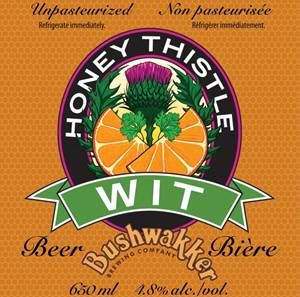
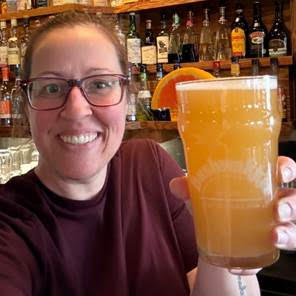
You know the warm weather is here to stay when our HONEY THISTLE WIT is on tap at YOUR Bushwakker! Our Belgian style witbier is made with malted and unmalted wheat, coriander, dried orange peel, grains of paradise and secret spices. A perfectly refreshing pint to usher in another Summer Hop Circuit season this weekend!
BUSHWAKKER SEASONAL BEER STATUS Our seasonally available HONEY THISTLE WIT, BLACKBERRY GRAPEFRUIT ALE, CHINOOK E.S.B., BARON BOCK and 35th ANNIVERSARY DOUBLE HONEY IRISH RED ALE are currently available. There is also a batch of UPENDI PINEAPPLE PASSION FRUIT SOUR working its way through the brewery!
Our WEEKEND SPECIAL DINING FEATURE for May 15th & 16th is TROPICAL GLAZED SKMOKED DIEFENBAKER TROUT WITH COUSCOUS SALAD. Our Saturday CLASSIC STEAK & A PINT SPECIAL as well as our Monday and Wednesday WINGS & A PINT SPECIAL and Tuesday PIZZA & A PINT SPECIAL are also great value deals. Please note you can also have a pop, lemonade, sarsaparilla, ice tea or coffee instead of a pint of beer if you wish!
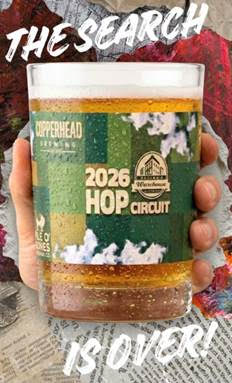
After an extensive search, a brand new Hop Circuit glass design created by a local artist will be unveiled when the 2026 Hop Circuit kicks off this May Long Weekend!
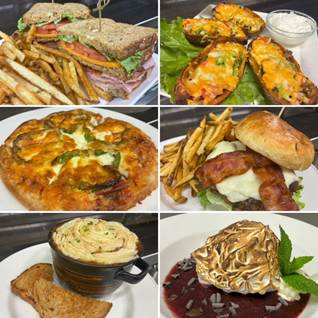
Our current Seasonal Menu will soon be at an end. We’ll be switching to a new summer seasonal menu in the coming weeks. So enjoy these delicious throwback delights while they are still available: Chef Mike Favourite Pizza, Classic Bushwakker Potato Skins, Baked Alaska, a traditional Bushwakker Clubhouse, Loaded Prime Rib Burger and our Cottage Pie too!

We are currently seeking day and evening line cooks for both our hot and cold side. We have a scratch kitchen with a brigade-style set up. Group benefits offered after six months. Positions are full time. Must have minimum two years line cooking experience. References requested and required. Drop off your resume or email it to Kelly@bushwakker.com today!
UPCOMING EVENTS

May 15: 2026 HOP CIRCUIT KICKOFF MAY LONG WEEKEND! The most popular Regina Craft Brewery Event is back for another Saskatchewan summer this long weekend! Grab your free map and take a hike or your bike and visit all six participating Regina craft breweries. Collect a stamp on your map at all six locations and receive a free 2026 Hop Circuit commemorative glass. This year’s design was a local contest submission winner!
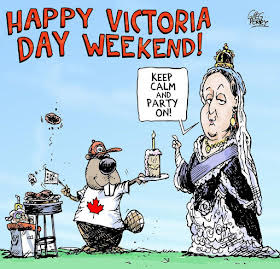
May 18: VICTORIA DAY MONDAY. Closed for the holiday. Be sure to stock up on some cold Bushwakker offsale for the long weekend.
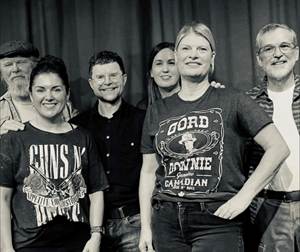
May 20: Wednesday Folk Night. BLUE LIGHT VALLEY. Folk, country and roots with great harmonies and continuously growing membership! 7:30 PM – 9:00 PM.
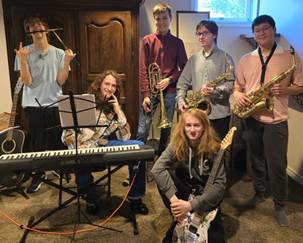
May 25: Monday Night Jazz & Blues. THE CAMPBELL COMBO COLLECTIVE. Young talented jazz group is back to deliver some great jazz standards – their way! 7:30 PM – 9:00 PM.
The Soul of Wit
By Jeff Alworth
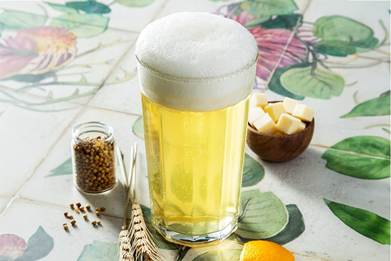
Photo: Matt Graves/mgravesphoto.com
Witbier was born on March 13, 1966—or, more accurately, reborn.
The style had been one among an impressive scattering of hyper-local wheat ales in a small area that ran from Brussels north to Antwerp and east about halfway to the current German border. Traditional ales took a beating in the 20th century thanks to wars, the arrival of lagers, and changing tastes, and the last of the old Hoegaardse bieren hadn’t been brewed in almost a decade.
Yet the 1960s revival wasn’t a 19th century throwback. Thanks to a twist or two, it was a new kind of Belgian ale that would remain popular well into the 21st century.
White Beers
Brewing with wheat is an ancient practice that stretched well beyond the Low Countries, out to Berlin, beyond to Grodzisk, and dipping down into Bavaria. For these beers, the barley typically was “wind-malted”—that is, germinated but unkilned—and the wheat, when used, was either malted in the same way or unmalted. Thus, these beers often had a pale, milky color; drinkers of the time described them as white. (Notably, Belgian brewers had no fidelity to specific grains or malts; wheat found its way into many ostensibly barley-based beers, and some would also include spelt or oats.) In Belgium, white beer (bière blanche in French; witbier in Flemish) was more of a broad category than a cohesive style, though products from different localities probably resembled each other.
In the 19th century, some of the region’s most prized ales were whites, especially those made in the famous brewing city of Leuven. While many countries made white beers, the heart of what we now call Belgium specialized in them. The most famous were probably the Leuven beers—Peeterman and blanche—though today the lambics of Brussels and Pajottenland carry the torch. Beyond those were Antwerp’s seefbier, a beer from Diest that was similar to Peeterman, and, of course, the unusual specialty named for the hamlet of Hoegaarden.
Of these, Hoegaarden’s local specialty may have been the most intriguing. In the typical Belgian manner, it involved an incredibly complex mashing system with multiple worts—some boiled with aged hops, others not. The beers described by two 19th-century writers, J.B. Vrancken and Georges Lacambre, didn’t have a lot of wheat—two parts, versus five or six of barley—but they did have a fair proportion of oats—one to one-and-a-half parts.
All of that was common for the time, but here’s where things get interesting: Like lambic, Hoegaarden’s witbier was spontaneously fermented—but it was also served fresh. Brettanomyces played no role, but lactic acid bacteria did. The goal was to get tankards of witbier into people’s hands before it got too tart. Lacambre suggests the outer limit was a bit more than a week after knockout in the summertime, or a bit longer than two weeks in winter. Amazingly, it was served while still actively fermenting.
How did it taste? Lacambre, an opinionated brewer who didn’t always align with popular views of the time, reported that it was extremely pale, highly effervescent, and less sweet than the Leuven wheat beers; however, he found that, like the Leuven beers, the Hoegaarden beer had a “raw taste, which has something wild about it.” One thing he didn’t mention were spices—no coriander, orange peel, or any others. The Hoegaarden described by Lacambre was under-fermented, and in his book Brewing with Wheat, Stan Hieronymus reports a gravity of just 8°P (1.032).
One by one, all the old wheat beers had disappeared by the 1960s—except for lambic, whose makers seemed too stubborn to let it go.
Pierre Celis’s New Oud Hoegaards Bier
Hoegaarden was once a relatively famous brewing village, thriving in a seam between tax jurisdictions. Yet the 20th century and changing fashions took their toll, and the village’s last witbier brewery, Tomsin, closed in 1957. In the mid-1960s, it would have been impossible for someone in Hoegaarden to imagine that their local beer would one day be sold worldwide.
The fate of the town’s legacy rested in the hands of a milkman who once worked briefly at Tomsin. Pierre Celis had managed to collect some notes from one of the old brewers in town. He cobbled together a small brewery in his cowshed, and there he tried to develop a commercially viable version of the beer he had loved when he was younger.
The beer he released in 1966 would form the template for modern witbier. He called it Oud Hoegaards Bier, but it was really a new thing. To begin with, Celis didn’t spontaneously ferment his beer. Some accounts suggest he found an old yeast culture that might have had some lactic acid–producing bacteria, but others say he sourced a regular ale yeast from a nearby brewery. This was a big change, and not just because it would have seriously changed the flavor—it also meant he didn’t need to serve it immediately and while still fermenting. He seems to have settled on the now-canonical coriander and orange peel spicing as a substitute—though possibly not right away. In his 2005 book My Life, Celis includes his first recipe, but it does not mention spices. Did he use them then and just not mention it—not unusual among Belgian brewers—or start using them later? We’ll probably never know. One ingredient that seems to worm its way into many Belgian recipes is mystery, and Celis seems to have added a sprinkling of that.
Given the beer’s weird provenance and its shoestring reinvention, it’s amazing that it became a hit. Whether he included spices initially or added them over time, his new witbier—with a gently phenolic yeast, clouds of flavorful wheat, and a snappy citrusy finish boosted by spices—had propelled sales to about 65,000 barrels within 20 years. In 1985, a fire destroyed the brewery he called De Kluis (or the cloister), and he sold 60 percent of his stake to Artois, which rebuilt it. In 1990 he retired and sold the rest of his stake. By that time, Artois—which would essentially become Interbrew and later AB InBev—was selling a quarter-million barrels of a beer now called Hoegaarden.
1995: A Big Year in American Wits
Two beers had relatively modest debuts in 1995, but both would go on to solidify witbier as the best-selling Belgian style in the United States.
In Denver, the head of new product development at Coors debuted a beer called Bellyslide Wit at the Sandlot Brewery at Coors Field, where the Rockies play. The brewer was Keith Villa, who had earned a doctorate in brewing biochemistry at the Free University of Brussels a few years earlier. His witbier included oats and used Valencia and navel oranges rather than the Curaçao peels Celis popularized. That beer—light, sweetish, and later pitched to a mainstream audience—became Blue Moon Belgian White.
The other debut came from a new brewery in Portland, Maine. Rob Tod, who had been brewing at Otter Creek, launched Allagash with exactly one beer in the lineup—the witbier that to this day still comprises 80 percent of the brewery’s production.
Celis, meanwhile, had relocated to Austin after his “retirement,” and he couldn’t resist starting a new brewery there in 1992. (Today, his daughter Christine Celis runs Celis Brewery while granddaughter Daytona Camps is a brewer.) A bottle from there made it to Vermont, sparking the idea for Tod’s new brewery. “I was inspired by Celis White, and the Belgian witbier style, in how it had such remarkable balance and depth of flavor,” he says.
Allagash White has become a counterpoint to the sweeter, simpler Blue Moon. So often, witbier can seem like a kiddie-pool version of Belgian ale, stripping away character for a pleasing yet overly tame beer. Allagash White is more complex and drier than the vast majority of other witbiers; it leaves the Belgium in the beer. Tod describes the balancing act of making a great one: “You have wheat, which imparts certain flavor components as well as certain challenges in the brewing process. You have spices, all of which have to be treated incredibly precisely, to make sure you get the spice component without the beer becoming overly ‘spicy’ or floral. There’s also the yeast strain, which is critical to the beer’s flavor.”
The recipe and formulation for White are fairly typical, though Allagash uses Curaçao orange peels—and, like Celis, tucks in a “secret” spice. A bit more than 40 percent of the grist is wheat, including both raw and malted, and about 5 percent is oats. It finishes at an austere 2.5°P (1.010). Jason Perkins, the brewery’s longtime brewmaster, notes that spice selection is very important. Also important is the classic Belgian practice of secondary fermentation in the bottle. “We’ve run sensory tests of conditioned vs. non-conditioned beer,” Perkins says, “and there is absolutely a flavor difference that comes with it.”
One of the more remarkable facts about Allagash White is how broadly Maine has adopted it as its own. You find it on draft everywhere there, and it does especially well in restaurants, where it complements food—even at roadside lobster-roll shacks. Yet Mainers don’t seem to regard it as a “fancy” beer—rather, it’s the workhorse they reach for in any season or for any occasion.
Nationally, witbier is less common than many other styles, and certainly less common than it was 20 years ago. But so are Belgian-style beers in general. Of all the Belgian styles, witbier seems to be the most popular—which is a remarkable irony. The Belgian style that vanished 66 years ago is now the least likely to go extinct in the United States.
TIME OUT
A man was walking through a rather seedy section of town, when a bum walked up to him and asked the man for two dollars. The man asked, “Will you buy booze?” The bum replied, “No.” Then the man asked, “Will you gamble it away?” The bum said, “No.” Then the man asked the bum, “Will you come home with me so my wife can see what happens to a man who doesn’t drink or gamble?”
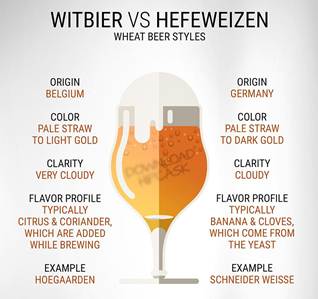
Our seasonally available Honey Thistle Belgian-Style Witbier is now on tap and in our offsale. Fans of German Wheat beers will find the Belgian equivalent to be a bit more complex but equally efficient in quenching a warm springtime thirst! Enjoy while quantities last!