THE WAKKER WEEKLY – Issue #1808
Issue #1808 – Posted on: 19 – September – 2025
BUSHWAKKER SEASONAL SUDS STATUS. There are still some bottles of MORK’S MEAD available in our offsale as part of our End of Summer Mead Release. Our seasonally available GOSE TO THE FINISH, SUMMER WHEAT, TANGERINE DRAGON FRUIT ALE, BOMBAY IPA and ENIGMA PALE ALE are currently pouring on tap and are in our offsale. There is also a batch of HARVEST OKTOBERFEST LAGER and GREAT PUMPKIN SPICED BROWN ALE working their way through the brewery!
Our Brand New Autumn Menu was released earlier this week. Our six sensational decadent delights include:
BUSHWAKKER NEW AUTUMN SEASONAL MENU
Beef Vindaloo Bowl
A bold and fiery, tangy tomato curry made with tender CAB beef chuck morsels on basmati rice and served with house-made naan.
BBQ Chicken & Peach Flatbread
Grilled BBQ chicken, bacon bits, peaches, pickled jalapenos and caramelized onions on a cream cheese base. Served on flatbread.
Pumpkin Gnocchi
House-made gnocchi in a brown butter and sage sauce with mushrooms, onions, spinach and Asiago cheese. Served with garlic toast. Add protein: New York Steak, Chicken Breast, Shrimp or Koubassa.
Birria Tacos
Six oz. CAB beef chuck braised in a cinnamon and clove seasoned tomato chili sauce served on three flour tortillas with Monterey Jack Cheese and Pico de Gallo. Served au jus and with your choice of side.
Cajun Steak and Shrimp
Seven oz. charbroiled Cajun-rubbed CAB New York striploin steak topped with five sautéed bbq spiced shrimp served in a creamy Creole sauce, with Cajun rice and seasonal chef’s vegetables.
Pumpkin Pie
Just in time for the fall harvest! As with our pecan pie, we will serve it your way; hot or cold, with whipped cream or ice cream.
View our limited time autumn menu at https://bushwakker.com/full-menu/autumn-seasonal-menu/
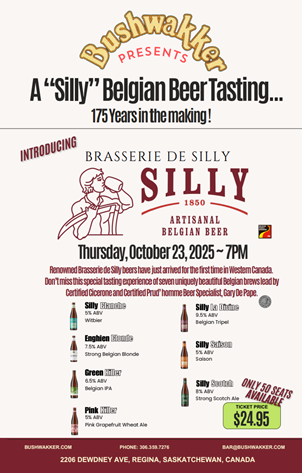
There are just a couple of tickets remaining to our upcoming specialty beer tasting event on Thursday, October 23rd featuring some newly introduced beautiful Belgian brews from the renowned BRASSERIE DE SILLY! Just released in Western Canada for the first time! Don’t miss this special tasting experience of seven unique beers lead by Certified Cicerone and Certified Prud’ homme Beer Specialist, Gary de Pape. $24.95 each. Call 306-359-7276 to get yours!
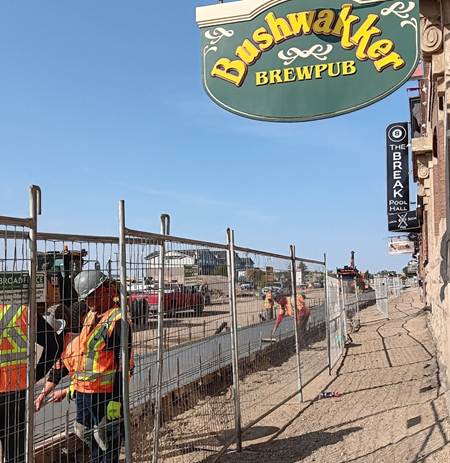
The new sidewalk is here! The new sidewalk is here! Now that the major underground infrastructure replacement work is nearing completion, the Dewdney Avenue Revitalization Project switches to the “beautification” phase. With sidewalks installed, the paving stones are scheduled to be nestled right by our front door very soon. We currently are experiencing a temporary front door access interruption, but don’t worry ‘bout it! You can easily get to us by using the rear entrance to the building and parking in the new free parking lot right across Cornwall Street. The construction is slated for completion by the end of November. Just eleven short weeks to go! Can’t wait ‘cause it’s gonna look great! #bushwakkerbrewpub #

Following last weekend’s heavy rainfall, we posted this image of our Facebook page and were surprised to see it reached over 150,000 viewers. There are definitely a growing number of people taking interest in the major construction taking place outside our front door!
Now that the majority of the underground infrastructure work has been completed in the two-year Dewdney Avenue Revitalization Project, the beautification phase has now begun! In addition to the boulevards and trees we also see the crown jewel of the improvement project revealing itself…Dewdney Lake! https://www.facebook.com/photo.php?fbid=1482386766758395&set=pb.100049612574594.-2207520000&type=3
Our BLUEGRASS BASH WEEKEND SPECIAL DINING FEATURE for Friday, September 19th & 20th is a SOUTHERN CHICKEN FRIED STEAK! Our Saturday CLASSIC STEAK & A PINT SPECIAL as well as our Monday and Wednesday WINGS & A PINT SPECIAL and Tuesday PIZZA & A PINT SPECIAL are also great value deals. Please note you can also have a pop, lemonade, sarsaparilla, ice tea or coffee instead of a pint of beer if you wish!
SEPTEMBER PREMIUM WINE FEATURES: This month’s featured wines hail from France! The Red is AVENUE SYRAH GRENACHE and the White is the popular blend, LA VIELLE FERME. Both are $8.95 for a glass and $23.95 for a half litre.
UPCOMING EVENTS
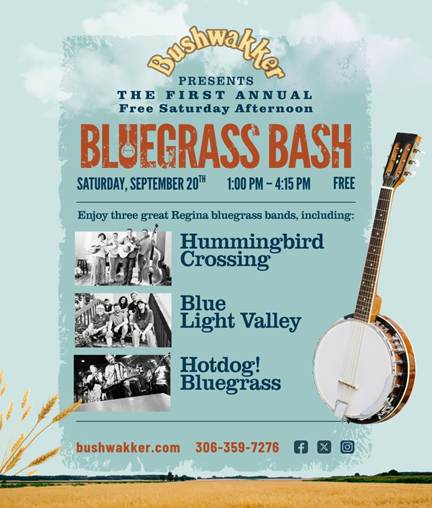
Sept. 20: BUSHWAKKER BLUEGRASS BASH! Given the positive response our previous Saturday afternoon music events have received, we thought we’d try another one! Enjoy a Free Saturday Afternoon Bluegrass Music Event showcasing three talented and popular Saskatchewan acts! Plan to arrive early in order to get a good seat! 1:00 PM.
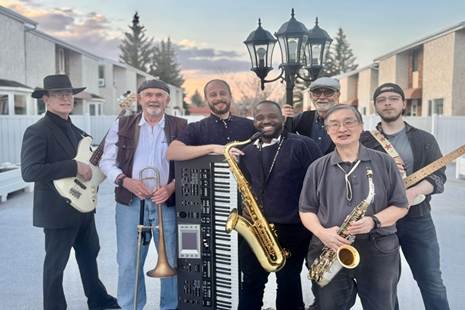
Sept. 22: Monday Night Jazz & Blues. THE OPERATORS. A fusion of jazz, blues and rock featuring horns that will blow you away and a singing rhythm section to soothe your soul. 7:30 PM – 9:30 PM.
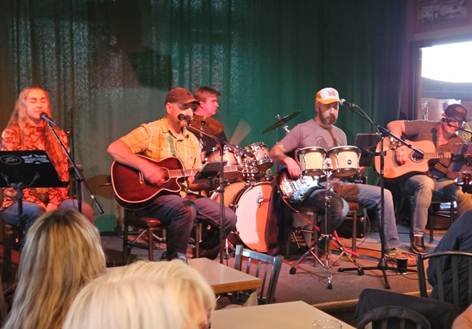
Sept. 24: Wednesday Folk Night. HARV & THE ACCOMPLICES. Popular family band returns to deliver even more great folk rock. 7:30 PM – 9:00 PM.
Plucked from obscurity: why bluegrass is making a comeback
By Emma John
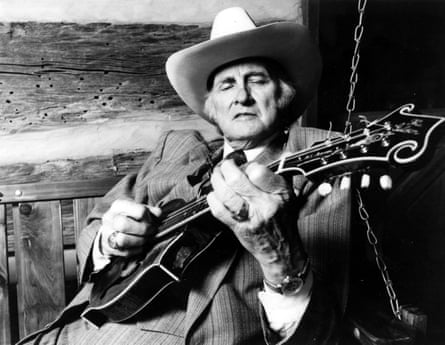
The ultimate gatekeeper … Bill Monroe’s trademark mutter was: ‘That ain’t no part of nothing.’ Photograph: Everett Collection Inc/Alamy
Editor’s Note: As part of our ongoing attempt to “defy the Dewdney Dig” we are offering a larger number of special events to give you even more reasons to come visit YOUR Bushwakker! This Saturday’s Free Afternoon Bluegrass Bash will be a great event connecting three very talented Bluegrass bands with an adoring throng of music lovers! The show starts at 1:00 PM so plan to arrive early to get a good seat. We open at 11:00 AM!
Bluegrass has no history of protest music. Or rather, its protest has always been a passive, melancholic one, the sound of displaced workers longing for their home in the Blue Ridge Mountains far away. It is a music whose roots are bedded so deep in its nostalgic view of America that it can seem estranged from the modern world – and vice versa.
In 1929, Bill Monroe left his home in Kentucky and headed north: he was 17 years old, and an orphan. Since his parents died, he had lived in a two-room log cabin in the woods with his uncle. Uncle Pen was a fiddle player who made a living playing at local square dances, with Bill by his side on mandolin and guitar. But these were the depression years, and there was no work in the south for young men. So Bill took the road through Indiana and joined his older brothers Birch and Charlie at an oil refinery on the shores of Lake Michigan, outside Chicago.
The three brothers had played music together as boys, and their skills proved popular. When they weren’t cleaning oil barrels they made extra cash entertaining their fellow migrant workers with mountain ballads and fiddle-and-banjo tunes passed down through generations of Scots-Irish settlers in the Appalachians. A keening for home flowed through their instruments as they sang of the mothers and sweethearts they’d left behind, of their little cabin home on the hill. As their audiences shuffled in from their long shifts, nostalgia gave even the gruelling poverty back home a rose-tinted glow.
Earl Scruggs’ parents were farmers in North Carolina; teenage Earl’s only options were working in a cotton mill, or war in Europe. Music was his escape, too. By the time he met Bill Monroe, in the 1940s, he had created his unique style of banjo playing. Monroe, now leader of his own band, hired him on the spot. It was the first time he’d met a musician who could keep up with him, who played with the speed and aggression he heard in his own head.
With Scruggs’ banjo at the centre, Bill Monroe and the Bluegrass Boys took the melancholy modes of Appalachian mountain music and combined them with the rattling energy of the modern industrial age. It was fast, uncompromising, virtuosic: country music turned up to 11. No one had ever heard its like before, and audiences couldn’t get enough. Monroe’s invention inspired new acts – Flatt & Scruggs, the Stanley Brothers, Reno and Smiley, Jim & Jesse – that copied his sound. A new genre was born.
But bluegrass music’s popularity was brief and doomed. Within 10 years, Elvis was rock’n’rolling, and the arrival of electric instruments made the acoustic string band sound old-fashioned overnight. Bluegrass was written off as hillbilly music. As for the poor banjo, its noisy jangle became the punchline to a thousand jokes.
Books and films have only reinforced the stereotype. The scene in which a pair of musicians face off on a porch in the Burt Reynolds and Jon Voight movie Deliverance, and the catchy ditty they play, “Duelling Banjos”, have been parodied by everyone from the Muppets to Father Ted. When he wrote the duel in the 1970 novel the film was based on, James Dickey could not have known that he was creating the most famous banjo meme of all time.
With its horror plot, often seen as a Vietnam war allegory, about four city men who take a canoeing trip in the Appalachians and find themselves hunted by hostile locals, Deliverance did not help anyone achieve a nuanced understanding of bluegrass’s regional home. But still, the playing of communal music in the book – between farm boy Lonnie and the urban Drew – is a rare moment of peaceful connection between the two warring cultures.
The spirit of creativity that lives in the music was always going to attract artists who want to take it somewhere new
“Drew slid down and went over and stood beside Lonnie,” wrote Dickey, who used to pick bluegrass ballads on his guitar in the mornings before he wrote. “They put the instruments together and leaned close to each other in the pose you see vocal groups and phony folk singers take on TV programs, and something rare and unrepeatable took hold of the way I saw them, the demented country kid and the big-faced city man, the minor civic leader and hedge clipper.”
It’s a surprise, in some ways, that a music so evocative of the south and its early 20th century history hasn’t made it into more US fiction. There’s a hint of it in Adriana Trigiani’s 2000 novel Big Stone Gap, which includes a moving encounter with the music at the Carter Family Fold venue. Charles Frazier’s award-winning Civil War novel, Cold Mountain, is too early for bluegrass – its characters play the traditional fiddle-and-banjo tunes that were the music’s precursor – but Frazier was clearly a fan, sprinkling his dialogue with Easter egg references to famous bluegrass songs (“Can’t you hear me calling?” asks one character, directly quoting Bill Monroe’s most famous song title).
But Southern Nobel laureate William Faulkner never wrote of it, nor has Cormac McCarthy. Perhaps it’s an issue of geographical constraints – bluegrass’s popularity remains concentrated in a small portion of the southern Appalachian mountains, where the state lines of Virginia, Kentucky, North Carolina and Tennessee converge. More likely it has simply been considered unworthy of notice: low art, uncomfortably associated with white redneck culture.
Something is changing, though. Acoustic music, live and unfiltered, is in vogue. This year’s Oscars ceremony featured two musicians known for their contribution to bluegrass music – Gillian Welch and Dave Rawlings, who have worked on numerous Coen brothers films, including, most recently, The Ballad of Buster Scruggs. Last year, Chris Stapleton, the country star who made his name as the lead singer with bluegrass outfit the Steeldrivers, duetted with Lady Gaga.
America’s hipster generation, in its continual search for authenticity, is chasing roots music back to the country’s earliest string bands, and their sound is being replicated in trendy bars in New York, Los Angeles and London. But it’s also finding its way into concert halls. Cellist Yo-Yo Ma is one of a number of classical musicians who have reached out to embrace instrumentalists whose virtuosity is a mirror image of their own. This year Carnegie Hall awarded Chris Thile, the mandolin-playing genius behind bluegrass bands Nickel Creek and Punch Brothers, a prestigious Composer’s Chair residency.
At this fractured moment in US history, no other genre sits so precariously on the faultline of America’s political divide. Bluegrass is the folk tradition of the south. You learn it at your father’s knee (it’s still heavily male-dominated) and play it communally in informal jam sessions, or “picking circles”. As improvisatory as jazz, it has a competitive spirit that derives from the way solos are passed around, each instrument trying to one-up what came before. But despite the machismo, it remains a fundamentally democratic and social music. If you can hold your own in the circle, you’re welcome there.
The idea that bluegrass is a rural, southern monopoly has been a myth for almost as long as it has existed. It was the folk revival on the east and west coasts that rescued it from an early grave as country radio stations abandoned it for a smoother, more mainstream sound. In 1959, Scruggs played at the inaugural Newport folk festival in Rhode Island and the same year, an Esquire article introduced bluegrass – which it called “folk music on overdrive” – to its urban readers. The genre found a new audience just as it was threatening to pass into obscurity.
No trendspotter could have predicted the peculiar cultural exchange that followed. The middle-class city kids encountering bluegrass at college gigs shared little common life experience with the blue-collar performers who had worked in mines and factories, or grown up on dirt farms. Not just their upbringings: their political and religious beliefs – not to mention their manner of speech and sense of style – were poles apart. Yet at festival campgrounds, the good old boys of Kentucky, the Carolinas and Tennessee were soon discovering that their new fanbase didn’t just enjoy listening to their songs. They could play them, too.
This influx of outsiders had consequences that have been fought over ever since. The music’s urban aficionados began pushing its boundaries as far as they knew how: copying the jazz stylings of Bill Keith, Tony Trischka and Bela Fleck in the north-east; embracing rock and psychedelia in Colorado, and in California, where a young Jerry Garcia once picked banjo. By the 70s, artists such as Sam Bush adopted the term “newgrass” to describe their sound; 40 years later, he and his peers are considered part of the bluegrass canon. Monroe acted as the ultimate gatekeeper; his trademark mutter, “that ain’t no part of nothing”, was deployed whenever he heard something he found less than acceptable. Bluegrass became a fiercely contested definition, with strict rules covering everything from rhythm (must have a dominant offbeat) to instrumentation (no electric instruments, no drums – only guitar, banjo, mandolin, fiddle, Dobro (resonator guitar) and bass are allowable). The irony is that Monroe and the bluegrass pioneers were the avant garde of their times, and the improvisational spirit that lives in the music was always going to attract the kind of artists who want to take it somewhere new.
The result is a conflict that runs through the core of the music’s culture. In its southern heartland, artists such as Del McCoury, Doyle Lawson and Junior Sisk maintain the music’s original stylings. Their audience is conservative, Christian and fond of the old ways; there are gospel numbers, and songs about how things used to be better in daddy’s day. Meanwhile, a progressive, metropolitan scene is, arguably, securing the music’s future. From the highly trained brilliance of Ivy League graduates such as Brittany Haas to the rollicking rock of stadium-fillers Greensky Bluegrass and Trampled By Turtles, their genre-bending efforts are reaching audiences younger and many hundreds of times larger than anything the traditionalists can hope for.
Which means that this music is becoming increasingly politically potent. For many decades, bluegrass standards have focused on a few select topics: moonshine-fuelled nights and Sunday morning repentance, love gone wrong and murder ballads (usually a subset of love gone wrong). Last year a band called Che Apalache, which includes members from Mexico and Argentina, toured the rural south for the first time. Their effervescent playing won over the traditionalist die-hards, and that goodwill earned them the right to bring their own Latino slant to the music – and to sing their hard-hitting protest song, “The Wall”. “There’s all kinds of talk ’bout building a wall … between me and you,” they sang, to audiences who had voted for that wall. “Lord, and if such nonsense should come true, then, we’ll have to knock it down.”
Performers such as Rhiannon Giddens are reclaiming the music’s African American roots. Giddens’ group the Carolina Chocolate Drops restores the tradition of the black string band that had been all but written out of bluegrass history, telling stories of the black American experience, from slave children to police shootings. Perhaps the most radical influence in bluegrass right now, however, is a grassroots group called Bluegrass Pride. Formed two years ago by a couple of San Francisco pickers with the simple goal of entering a float in the city’s Pride parade, they have grown into a powerful voice for diversity and inclusivity in a musical community that is still overwhelmingly white and male. It isn’t easy. Some of the biggest stars in traditional bluegrass still refuse to employ gay musicians on religious grounds. Some of the best female players struggle to get auditions for band spots. LGBT and women’s rights in the south remain under constant threat, be it via Alabama’s abortion ban or North Carolina’s (since repealed) “bathroom bill”, which would have criminalised transgender people who used a different public toilet from that of their birth gender.
And yet Bluegrass Pride has revealed the secret magic at the heart of this music. Because of its fundamentally social tradition – and the democracy of the picking circle – bluegrass is unique in the wider culture war: a rare public space where both sides of the great American divide can and will sit down together. The passion and pride that bluegrassers feel for their music override political, and even personal, animosity, forging unlikely friendships, challenging innate prejudices.
It’s an unexpected legacy for a music that still carries so much baggage. But then bluegrass, with its arcane rules and rapid execution, has always been full of mysteries. “Through everything he played there was a lovely unimpeded flowing that seemed endless,” Dickey wrote of his musical prodigy Lonnie in Deliverance. “The fingers moved only slightly about like those of a good typist; the music was just there.” The banjo is a far more subtle instrument than anyone wants to believe.
TIME OUT – Bluegrass Bashing
Why do fiddle tunes have names? So you can tell ‘em apart!
How many bluegrass musicians does it take to change a light bulbulb? Four. One to change it and three to stand around and complain that it uses electricity.
Perfect pitch is the ability to throw a banjo into a dumpster and hit an accordion.
My son said that when he grew up he wanted to play the banjo. I told him “I’m sorry son, you can’t do both.”
What do you call one thousand banjos at the bottom of a lake? A good start!
Did you hear about the fiddle player with fingers like lightning? They never hit the same place twice.
Why is a banjo like a guided missile? By the time you hear it, it’s too late.
You may notice that a lot of bluegrass jokes are simple banjo jokes. They’re banjo jokes because banjo players have the best senses of humour and they’re simple so bass players can understand them.
The other day, I went to the store with my banjo in the back seat. Well, I forgot to lock the doors! When I came back…….there were two banjos in there!
Banjo players spend half their time tuning, and the other half playing out of tune.
A group of banjo players were kidnapped from the Earl Scruggs center. The kidnappers demanded a ransom or each week they would set one free.
What’s the difference between an onion and a banjo? Nobody cries when you chop up a banjo.
What’s the difference between a frog walking down the road and a banjo player walking down the road? The frog might be going to a gig.
If these are your two best loves then The Bushwakker is where you need to be this Saturday afternoon!